Compete With Yourself
You will notice who is faster, stronger, or more skilled at something. Comparison is common in sports, but it gives you only part of the story. You may not know another athlete’s experience, development stage, or practice opportunities. If every session becomes a ranking of people, you can miss real progress in your own work.
Competing with yourself means choosing a useful personal reference point. Compare today’s technique or decisions with your earlier attempts under similar conditions. You might track how often you check your surroundings before receiving a pass, not just how many points you score. Select a measure that rewards learning rather than doing more work at any cost.
Keep the comparison fair. A different drill, stronger opponent, or unfamiliar role changes the task. A lower number does not automatically mean you are going backward. Look for patterns over several sessions, and ask a coach to help interpret them. Sometimes progress means attempting a harder skill and accepting a temporary drop in accuracy.
You can still enjoy competition and appreciate talented teammates. Ask what they notice or how they approach a skill. Their success can offer information without taking anything away from you. At the end of a session, name one thing that improved and one thing you are still learning. Your goal is not to set a personal record every day; it is to become a more informed, capable version of yourself over time.
More than the finishing order
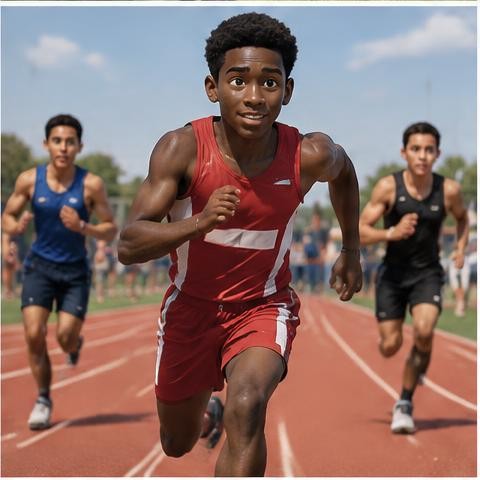
Amir finishes behind a teammate in every practice sprint and starts treating each session as proof of being slow. The coach asks Amir to focus on the first few steps and keeping the head position consistent rather than chasing the teammate’s stride. Over the next week, Amir compares notes from similar starts. The teammate still reaches the marker first, but Amir notices fewer sideways steps and a smoother transition. On a windy day, the times are slower for everyone. Amir records the conditions instead of calling the week a failure, then asks what to work on next.
Use your own progress to guide your work instead of letting comparison define your worth.
- Which comparisons motivate you, and which distract you?
- What could improve even when your place in the results stays the same?
- Which personal measure will you track this week?
Make your own reference point
- This week, choose one process measure with your coach, such as balanced finishes or early communication. Record a starting observation during an existing drill.
- Observe it again at two later practices under similar conditions. Note anything that changed about the task before comparing the results.
- At the end of the week, write one sign of progress and one question. Congratulate a teammate’s improvement without adding a negative comment about yourself.
RELATED — Celebrate Effort and Improvement · The Power of Preparation · Be Ready Before You Arrive
- 1 · NOW YOU UNDERSTAND —
- Your own past efforts can show useful progress without making another athlete’s success a measure of your worth.
- 2 · REMEMBER THE STANDARD —
- Track your learning honestly and leave room to celebrate others.
- 3 · PRACTICE IT —
- At week’s end, write one sign of your progress and one question, then congratulate a teammate without putting yourself down.
Check after the lesson was delivered and discussed. This mark is saved in this browser on this device only. It is not sent to a coach, team, school or organization, and no central record is kept.