Correct With Purpose
Before correcting an athlete, identify the learning target. Is the problem a decision, a movement pattern, or an unclear instruction? An athlete cannot act on “Be better” or “Want it more.” Describe what you observed and connect it to the task. “You received the ball facing the sideline; open toward the court so you can see both options” provides a direction the athlete can test. Keep your tone steady enough that the information remains audible.
Resist correcting everything at once. Working memory is limited, especially when an athlete is learning a new skill under pressure. Choose the cue with the greatest immediate value and match your language to the athlete’s experience. Demonstrate if words are not helping. Ask, “What are you looking for before the ball arrives?” Their answer can reveal a misunderstanding that another lecture would miss. Avoid treating a slow response as defiance.
Build feedback into a repeatable learning cycle: observe, ask or cue, allow another attempt, and check the result. Too much interruption can prevent athletes from finding solutions and leave the rest of the group waiting. Use natural breaks, small groups, or a brief individual check-in when possible. Ask permission for nonurgent individual feedback: “Would a quick cue help now, or after this round?” Immediate safety concerns still require an immediate stop.
Notice whether your correction changes the next action, not whether your speech sounds impressive. Say, “That time you opened early and saw the middle option,” even if the pass still missed. If the cue fails repeatedly, change the teaching method or simplify the task. Your responsibility is not discharged by saying the same thing louder. A useful correction leaves the athlete with a manageable next step and enough practice to learn it.
One cue at the net
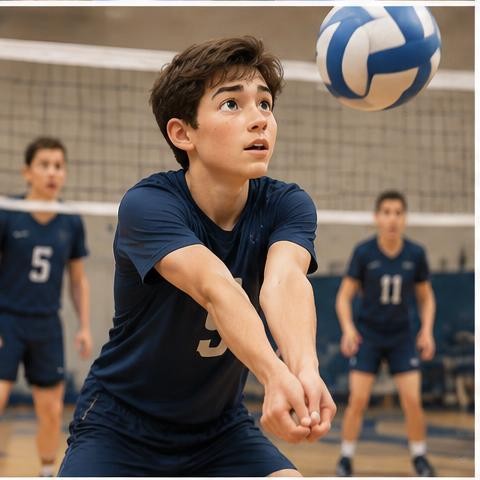
During serve receive, Nia swings her arms at the ball and sends three passes behind her. Coach Patel starts to mention feet, shoulders, and platform angle, then stops. She asks Nia what she feels. Nia says she is trying to lift every ball. Patel demonstrates a quieter platform and says, “Let the angle send it.” Patel gives Nia four controlled tosses before returning her to live serves. Two passes reach the target area; one still sails long. “Your platform stayed quieter on those two,” Patel says. At the next water break, Nia identifies the cue herself. They keep practicing without presenting a few improved repetitions as a finished skill.
Give one useful cue and a real chance to use it.
- Which of your frequent corrections is too vague to act on?
- How can you tell whether an athlete understood rather than merely nodded?
- What single-cue experiment will you try at your next session?
Your next coaching move
- At your next practice, choose one common error and prepare a short cue plus a demonstration. Remove any words that do not tell the athlete what to do.
- During one drill this week, count how often you interrupt. Replace two unnecessary stoppages with observation, then check understanding at the natural break.
- After giving a cue, provide at least a few appropriate repetitions and ask what changed. If nothing changes, adjust the task before repeating your instruction.
RELATED — Handling Mistakes and Self-Doubt · Own Your Mistakes · Support Without Pressure
- 1 · NOW YOU UNDERSTAND —
- Athletes learn more from one clear cue they can try than from a stream of corrections or vague criticism.
- 2 · REMEMBER THE STANDARD —
- Name the learning target, offer one usable cue, and allow another attempt.
- 3 · PRACTICE IT —
- Choose one common skill error, prepare a short actionable cue with a demonstration, and use it during a drill this week.
Check after the lesson was delivered and discussed. This mark is saved in this browser on this device only. It is not sent to a coach, team, school or organization, and no central record is kept.