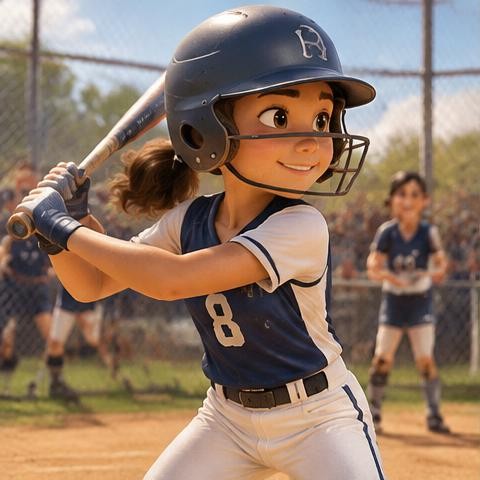
Every Kid Makes Errors. Yours Too.
Every child makes errors. They drop the ball, miss the open shot and go the wrong way. It is not a question of if. It is a question of when. Errors are how young athletes learn. Kids who are afraid of the error stop trying the hard thing, and they stop getting better.
Some parents keep score of other kids’ mistakes while acting as if their own child never makes any. ‘If that kid could catch, we would have won.’ ‘Mine never drops that.’ Said with love: your child does not walk on water. Their hard day is coming. The way you talk about other kids today is the way other parents will talk about yours.
Words travel. Comments in the stands reach the child who made the error, and your own child hears them too. Criticizing a teammate on the ride home teaches your child to blame teammates on the bench. Talk behind other families’ backs, in the parking lot or the group text, builds camps. Families stop speaking, kids pick sides, and the team splits. The blunt version is old for a reason: shut up and support. Cheer for everyone, criticize no child, and take real concerns privately to the coach.
The dropped fly ball
A ten-year-old drops a fly ball and the winning run scores. A parent behind Marcus says, ‘That kid can’t catch anything.’ Marcus stands and calls, ‘Shake it off, Jordan!’ He does not argue. He just refuses to join in. On the ride home, his daughter says, ‘We lost because of Jordan.’ Marcus answers, ‘You’ve dropped one too. What helped you when that happened?’ She thinks, then says her teammates cheered. ‘Then that’s your job next game,’ he says.
Quiet about other kids’ mistakes, loud in support of every kid.
- When have you made an error, and what helped you afterward?
- How would it feel to hear an adult criticize you from the stands?
- What will our family say instead when someone makes a mistake?
The family no-criticism rule
- Before the next game, agree as a family: we do not talk about other kids’ mistakes in the stands, in the car or online.
- During the game, cheer once by name for a player right after they make an error.
- If another parent criticizes a child, say something short like ‘They’re kids. Let’s cheer them through it,’ or walk away. In a group text, write, ‘Let’s keep this about supporting the kids.’
RELATED — Learning From Losing · Set Standards for Parents and Sidelines · Be the Example in the Stands
- 1 · NOW YOU UNDERSTAND —
- Errors are part of learning for every child, including yours, and adult comments about kids spread into the team.
- 2 · REMEMBER THE STANDARD —
- Criticize no child, in the stands, in the car or behind anyone’s back.
- 3 · PRACTICE IT —
- Cheer by name for a player right after their next error, and keep your family’s no-criticism rule all week.
Check after the lesson was delivered and discussed. This mark is saved in this browser on this device only. It is not sent to a coach, team, school or organization, and no central record is kept.