Stop Comparing Athletes
Children do not develop on matching schedules. Age, physical maturation, experience, access to practice, disability, and interest can shape what you see. A teammate’s current speed or skill does not predict your child’s whole future. Comparisons often turn useful information into a ranking of worth. ‘Why can’t you hit like Jordan?’ leaves little room for your athlete to identify a skill they actually want to learn.
Use the child’s own starting point instead. Ask, ‘What feels different from a month ago?’ Look for a more balanced stance, a clearer question, or a steadier response after an error. Improvement may be slow or hard to see, and you do not need to invent progress. You can honestly say, ‘That part is still difficult. What feedback would help?’ Keep siblings out of the measurement, even when they play the same position.
Admiring others is different from competing for family approval. Help your child notice a teammate’s useful habit without attaching a judgment: ‘She checks the field before the pitch. Is that something you want to learn about?’ Avoid ‘Your brother never needed reminders.’ When other adults compare children, redirect briefly: ‘They’re working on different things.’ Your athlete should not have to outperform a sibling, teammate, or online highlight to deserve your interest.
Different sisters, different goals
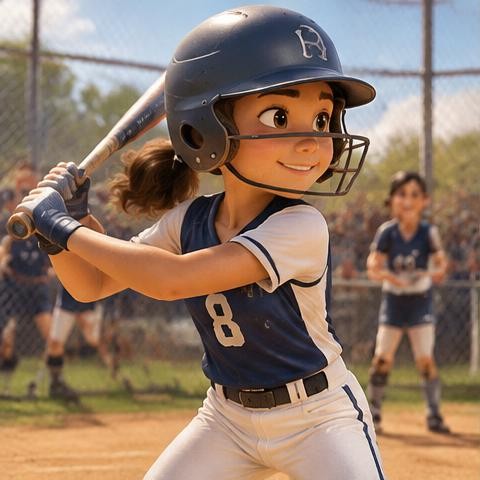
Nine-year-old Bea plays softball at the same park where her older sister once hit home runs. After Bea strikes out, her uncle starts recalling her sister’s early success. Bea’s guardian, Marcus, gently says, ‘Let’s talk about Bea’s day.’ Later he asks Bea which part of batting she wants help understanding. Bea says she loses track of the strike zone. With her coach’s guidance, she focuses on recognizing pitches during practice rather than chasing her sister’s distance. She still strikes out in the next game, but identifies a pitch she would previously have swung at. Marcus notices that decision without announcing that she is catching up to anyone.
Measure your child’s growth without making another athlete the measuring stick.
- Which comparisons make it harder to enjoy learning?
- What can we admire in another athlete without judging ourselves?
- What personal marker will we pay attention to this month?
Replace the measuring stick
- This week, notice when your thoughts turn to another athlete’s results. Pause before turning that comparison into a comment to your child.
- Ask your athlete to choose one personal learning marker with their coach’s input. Record a simple starting observation, not a family ranking.
- At the end of two weeks, discuss what changed and what remains difficult. Keep siblings’ performances and social media highlights out of the review.
RELATED — Confidence Without Arrogance · Gratitude for the People Who Help You · Support Without Pressure
- 1 · NOW YOU UNDERSTAND —
- Children grow on different timelines, so another athlete’s performance cannot measure your child’s worth or potential.
- 2 · REMEMBER THE STANDARD —
- Notice personal growth without ranking your child against others.
- 3 · PRACTICE IT —
- Ask your athlete to choose one learning marker, record a starting observation, and revisit it without comparing siblings or teammates.
Check after the lesson was delivered and discussed. This mark is saved in this browser on this device only. It is not sent to a coach, team, school or organization, and no central record is kept.